When change is not accepted: Brand Consistency
What do Gap, Pepsi, Uber and Tropicana have in common?
Lessons in brand consistency (for all you marketers out there…)!
A lack of brand consistency can have a negative impact on a company's reputation and sales. Here are some real world examples of companies taking a hit when they failed to maintain a consistent brand image:
Gap Logo
When clothing retailer Gap attempted to update its logo in 2010 for a more modern design, the move was met with widespread criticism from customers who were attached to the brand's traditional logo. The company quickly reverted back to the original logo, highlighting the importance of consistency in maintaining customer loyalty.
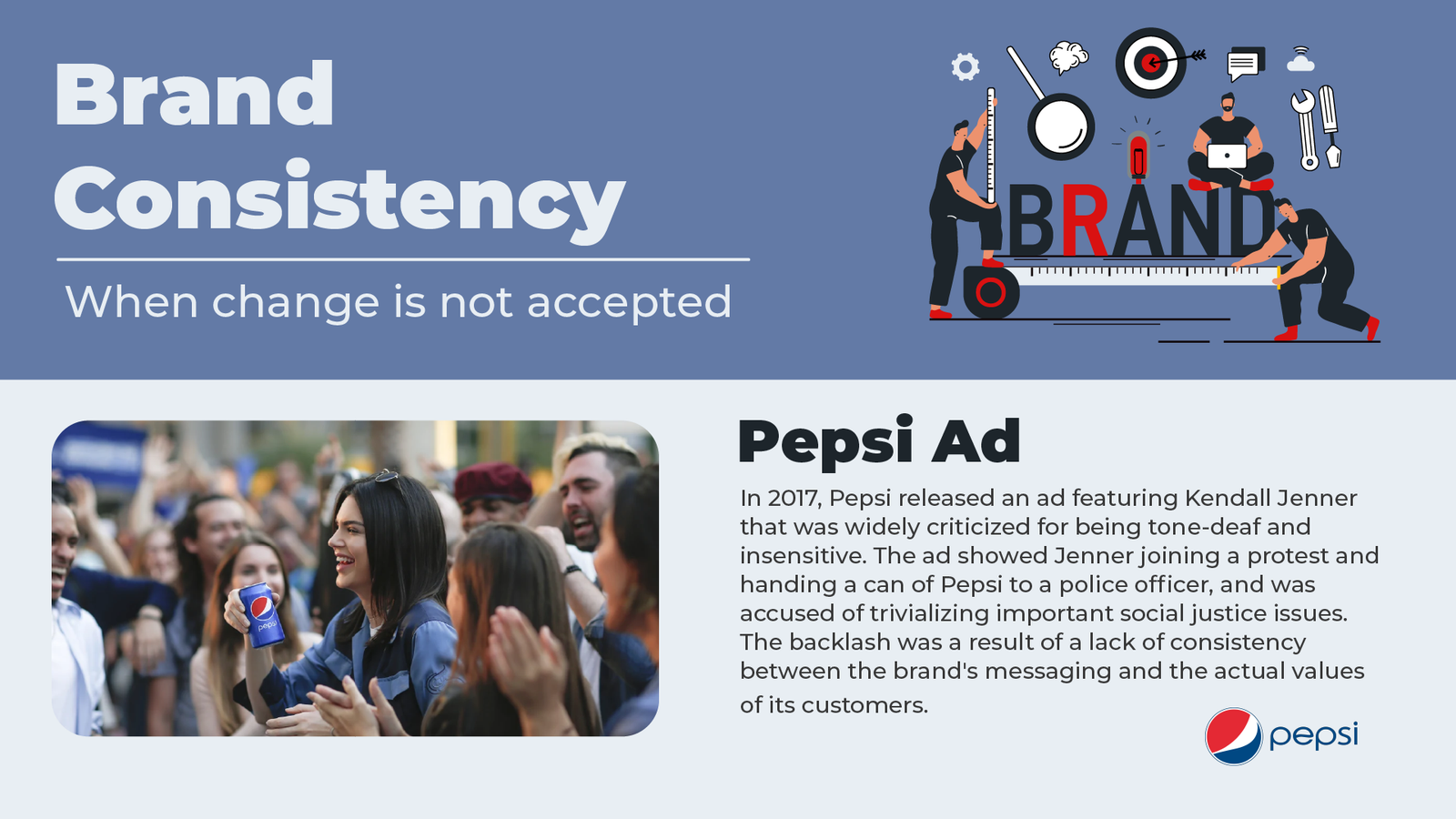
Pepsi Ad
In 2017, Pepsi released an ad featuring Kendall Jenner that was widely criticized for being tone-deaf and insensitive. The ad showed Jenner joining a protest and handing a can of Pepsi to a police officer, and was accused of trivializing important social justice issues. The backlash was a result of a lack of consistency between the brand's messaging and the actual values of its customers.
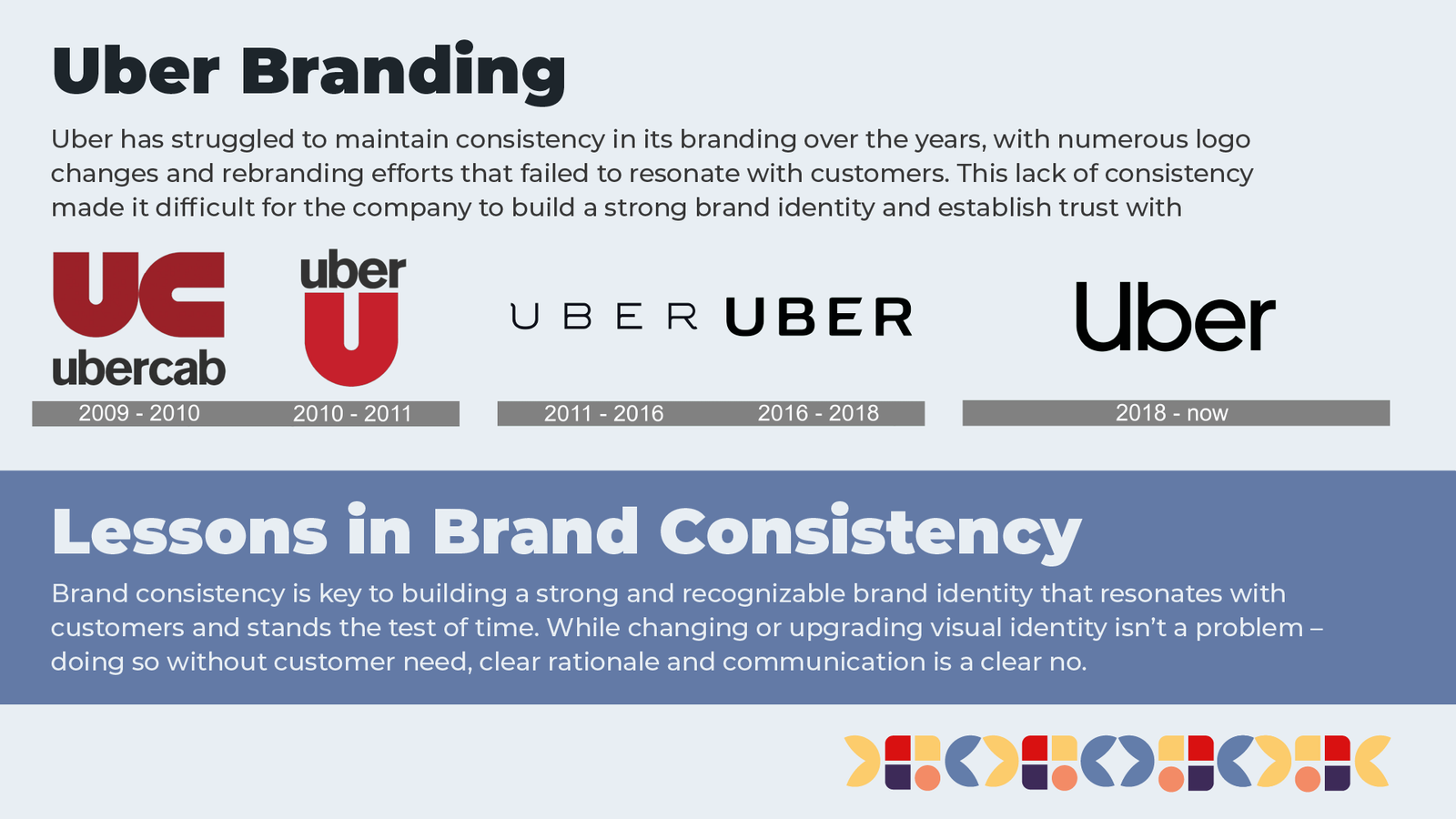
Uber Branding
Uber has struggled to maintain consistency in its branding over the years, with numerous logo changes and rebranding efforts that failed to resonate with customers. This lack of consistency made it difficult for the company to build a strong brand identity and establish trust with customers.
Tropicana Packaging
Tropicana attempted to update its packaging in 2009 to a more modern design, but customers who could not relate to the new packaging protested and sales dropped by 20!
Lessons in Brand Consistency
Brand consistency is key to building a strong and recognizable brand identity that resonates with customers and stands the test of time. While changing or upgrading visual identity isn’t a problem – doing so without customer need, clear rationale and communication is a clear no.
How consistent is your brand in the eyes of customers? Get in touch with us for an expert evaluation.